 Los Altos Sub-Zero Appliance Repair
Remodel-era BI-36, fresh-food climbed to 48°F while the freezer stayed cold. They traced it to the evaporator fan rather than the compressor, replaced it, and the cabinet recovered to 38°F before they left. A genuine same-day fix.
Home / Old Los Altos Sub Zero Not Cooling: evidence-first Sub-Zero guidance
Sub-Zero firstLos AltosNot-cooling hub
Old Los Altos Sub Zero Not Cooling: evidence-first Sub-Zero guidance
When a Sub-Zero is not cooling in an older Los Altos kitchen, split the symptom by compartment and check airflow, fan, defrost, thermistor, gasket and cabinet ventilation before sealed-system assumptions. Older remodels can hide condenser restriction, panel alignment, fragile trim, and serial-specific parts behind a symptom that sounds simple. The first useful evidence is temperature by zone, model tag, cabinet photo, and frost or airflow proof.
- First split
- Fresh-food, freezer, both
- Old remodel risk
- Panels and airflow
- Do not guess
- Compressor
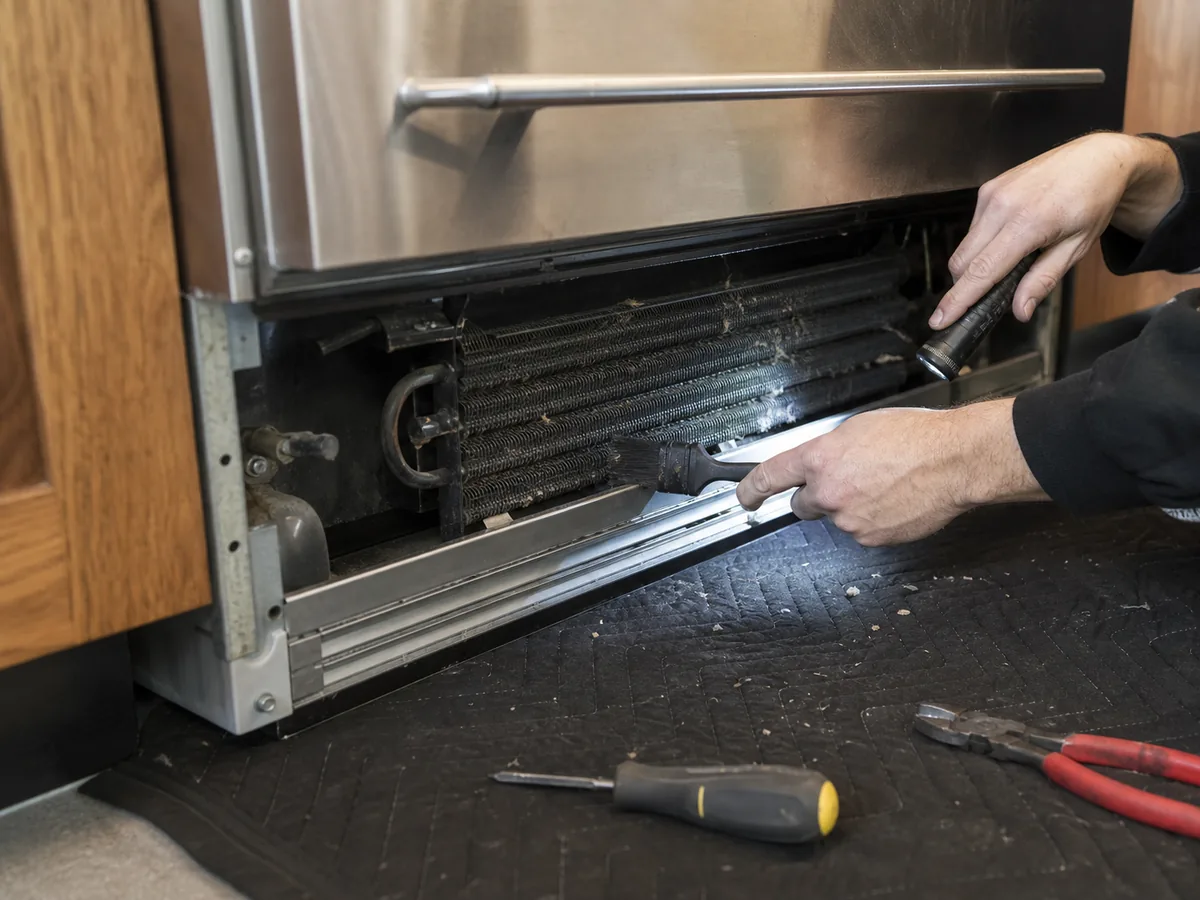
Why is my older Sub-Zero in Los Altos warm in the fridge but cold in the freezer?
In Woodland Acres and across 94024, Los Altos Sub-Zero Appliance Repair first splits fresh-food versus freezer temperatures, then checks condenser airflow, the evaporator fan and defrost before any compressor talk; ring (650) 668-1043 and we will triage your warm built-in the same Los Altos day.
Customer reviews
What Los Altos homeowners say
During a hot August week both compartments drifted warm and I assumed the worst. It turned out the condenser was choked with dust, and a cleaning and airflow service brought it right back with no expensive parts. They documented the recovery temperature too.
Freezer warmed first, with a frost wall building up at the back. They photographed the frost before anything, then replaced the defrost heater and sensor. They explained exactly why manually defrosting it first would have hidden the evidence.
Direct answer continued
What this usually means
Sub-Zero not cooling in Los Altos can mean one compartment is losing airflow while another still holds, both compartments are losing heat rejection, or an alarm is reporting a trend that needs model-specific interpretation. In Old Los Altos, older cabinet openings and newer panels can also hide ventilation problems. A sealed-system repair is one possible path, but it is not the first assumption.
The first test is to define the pattern, protect food if necessary, then preserve evidence before resets or full defrosting remove the clues.
Required table
Symptom pattern to first test
| Symptom pattern | Likely causes before sealed-system work | First test |
|---|---|---|
| Fresh-food warm, freezer still cold | Airflow, evaporator fan, defrost, thermistor, gasket | Check airflow, frost pattern, fan operation, and actual temperatures. |
| Freezer warm first | Door seal, defrost issue, sealed-system suspicion, condenser load | Check frost pattern, condenser airflow, freezer temperature trend, and door closure. |
| Both compartments warm | Condenser airflow, condenser fan, control, sealed system | Check lower grille, coil condition, fan, compressor run behavior, and recovery. |
| Cycles constantly but does not recover | Airflow restriction, dirty condenser, weak compressor, low charge | Document condenser state before any sealed-system conclusion. |
| Frost wall or blocked rear panel | Defrost heater, sensor, fan, blocked drain or airflow | Photograph frost before a full defrost if food safety allows. |
| Alarm plus warm cabinet | Door event, sensor, fan, board, actual cooling failure | Record display, actual temperature, and door history. |
Old Los Altos specifics
Older remodel cabinet clues
| Cabinet clue | Why it matters | What to photograph |
|---|---|---|
| Original opening with newer panels | Trim can be fragile and appliance age may not match the remodel date. | Have ready wide cabinet photo and mention past remodel work. |
| Tight toe-kick or floor transition | Pull-out work may need protection and extra setup. | Photograph floor and toe-kick before approval. |
| Panel-ready heavy door | Gasket frost can be caused by hinge or panel alignment. | Have ready door edge and full-height panel photos. |
| Sun-facing or busy family kitchen | Condenser load and door-open patterns can imitate larger failures. | Have ready actual temperatures and usage context. |
Prep checklist
What to move or photograph before service
| Item | Move or photograph? | Reason |
|---|---|---|
| Unsafe food | Move if temperatures are unsafe | Food safety comes before preserving diagnostic evidence. |
| Frost pattern | Photograph before defrosting if safe | Frost location can separate defrost, airflow, and sealed-system paths. |
| Lower grille and condenser area | Photograph if accessible without tools | Condenser load can imitate a major cooling failure. |
| Door edge and gasket | Photograph close-up and wide | Gasket, hinge, and panel alignment may cause warm-air leaks. |
| Cabinet opening | Photograph wide | Trim, floor transition, and toe-kick change access and labor. |
Neighborhood context
Local notes
Old Los Altos and Downtown kitchens near older remodel corridors can combine original openings, replacement panels, and newer appliances. North Los Altos homes may have heavy daily use that loads the condenser and changes door-open patterns. Foothill and Country Club properties can make cabinet movement, parking, and access windows more important than the repair shop script suggests.
That local reality is why the page asks for model evidence, temperature evidence, and cabinet evidence together. A no-cool appointment without those details is more likely to become a second visit.
No sealed-system shortcut
When not to guess
Do not approve a compressor, sealed-system, or control-board quote from "not cooling" alone. Do not fully defrost a stable unit before photographing the frost pattern. Do not force panels, grilles, or drawers to expose a tag. If access is tight, the cabinet-safe plan belongs in the estimate before the appliance is moved.
Explore more
Related pages
For a complete answer, connect this page with Sub-Zero repair cost in Los Altos, the canonical Sub-Zero not-cooling diagnostic (this page covers the older Old Los Altos remodel angle), freezer not freezing, model-first diagnostics, cabinet-safe built-in service, Los Altos route notes, and call or book online.
Visible Q&A
Questions this page answers
Is the refrigerator warm but freezer cold a compressor problem?
A fresh-food section that is warm while the freezer is cold is not automatically a compressor problem. The first test is usually airflow, evaporator fan, defrost, thermistor, gasket, and cabinet ventilation. Compressor or sealed-system work should be discussed only after basic zone-specific evidence fails to explain poor recovery.
What should I check first when a Sub-Zero is not cooling in Los Altos?
The first check is the symptom split: fresh-food warm, freezer warm, both compartments warm, wine drift, or ice maker slow because the freezer is high. That split changes the first test. Record temperatures and photograph frost, condenser access, gasket condition, and the model tag before resetting the appliance.
Should I defrost a warm Sub-Zero before service?
Defrost only if food safety or water risk requires it. If the unit is stable enough to document, photograph the frost pattern first because it can point to airflow, defrost, fan, gasket, or sealed-system conditions. A full defrost can erase the evidence that makes the first visit more accurate.
Why does the model and serial number change a Sub-Zero quote?
The model and serial number can change the part path because similar Sub-Zero symptoms may use different gaskets, fans, boards, valves, sensors, or sealed-system components. That matters most on panel-ready and older built-in Sub-Zero refrigerator installations. Have ready a readable tag photo so the estimate does not rely on appearance alone.
Can a Los Altos built-in be serviced without damaging custom cabinets?
A Los Altos built-in can often be diagnosed in place when the first tests involve temperatures, airflow, condenser condition, door seal, display alarms, or model verification. Movement should be justified by the symptom and access need. Have ready a wide cabinet photo so floor protection, trim clearance, and panel alignment are considered before the visit.
How do I schedule Sub-Zero service in Los Altos?
Call (650) 668-1043 or use the online booking link to request a Los Altos Sub-Zero appointment. Have your model and serial number, current temperatures, and a wide cabinet photo ready so the technician can plan parts and access before arriving.
Should I replace or repair an older Sub-Zero in Los Altos?
Repair usually makes sense when the failure is isolated, parts are available, and the cabinet opening would be expensive to change. Replacement becomes more reasonable when parts are unavailable, repeated sealed-system work has failed, or a remodel is already planned. Compare the repair quote with cabinet, panel, delivery, and downtime costs.
Call or book online
Schedule Sub-Zero service
Model, serial number, and diagnostic evidence determine the final quote, so the estimate is built on what is actually confirmed at the appliance.
Call (650) 668-1043 to schedule Sub-Zero service in Los Altos, or book online (opens in a new tab).
Price table
Not-cooling repair costs for Los Altos built-ins
Planning ranges for the repairs behind a warm Sub-Zero in older Old Los Altos remodels. A diagnostic confirms the path before any major part is approved.
| Service | What it covers | Price range | Time |
|---|---|---|---|
| Diagnostic visit | Compartment split, temperature and airflow readings | $185-$295 | 45-90 min |
| Condenser cleaning & airflow | Summer heat-load coil clean, condenser fan check | $185-$420 | 1-2 hrs |
| Evaporator fan motor | Fresh-food warm, airflow restored | $340-$760 | 1-2 hrs |
| Defrost system | Frost wall, heater/thermostat/sensor | $360-$890 | 1-3 hrs |
| Thermistor / temperature sensor | Drift or miscalibration | $260-$580 | 1-2 hrs |
| Sealed system / compressor | Leak, recharge, or compressor | $1,800-$4,800 | 3-8 hrs |
What sets the final price: which compartment warmed first, condenser dust load, the frost pattern, and whether airflow tests clear before any sealed-system quote.
Step by step
How to triage a Sub-Zero that is not cooling
Before you call, these steps capture the evidence that points to the right repair and protect the diagnostic clues.
- Identify the warm zone. Note whether the fresh-food side, the freezer, or both compartments are warm; the split changes the first test.
- Record actual temperatures. Read each compartment in °F rather than trusting the display alone.
- Check the condenser. Look at the lower grille for dust; a packed coil in summer heat can imitate a sealed-system failure.
- Photograph any frost. Capture a frost wall or pattern before defrosting, since a full defrost erases the evidence.
- Confirm the door seal. Verify the door closes fully and the gasket is not gapping before assuming a major fault.
Service facts
Not-cooling facts for Old Los Altos built-ins
- Fresh-food warm while the freezer stays cold usually means airflow, evaporator fan, defrost, or thermistor: a $260-$760 range, not a compressor.
- Both compartments warm together points first to condenser airflow; a $185-$420 cleaning often restores cooling.
- Photograph any frost wall before defrosting: a full defrost erases the evidence that confirms a defrost or airflow fault.