 Los Altos Sub-Zero Appliance Repair
A flashing alarm on our BI-42 panicked us. They read it against the actual temperatures and the model rather than a generic chart, found a failed temperature sensor, and replaced it. Exactly the careful answer I was hoping for.
Home / Sub-Zero alarms are clues, not a universal parts chart
Sub-Zero firstLos AltosTechnical page
Sub-Zero alarms are clues, not a universal parts chart
A Sub-Zero alarm is read by your model and serial, not a generic code chart. The same flashing "Service" light, "Vacuum Condenser" reminder, over-temp warning, or warm fresh-food airflow symptom points to different parts across BI, Classic, and Designer families. For Los Altos built-ins, document the display and real compartment temperatures, then verify the component before any board swap.
- Homeowner safe
- Photo, temps, door state
- Tech work
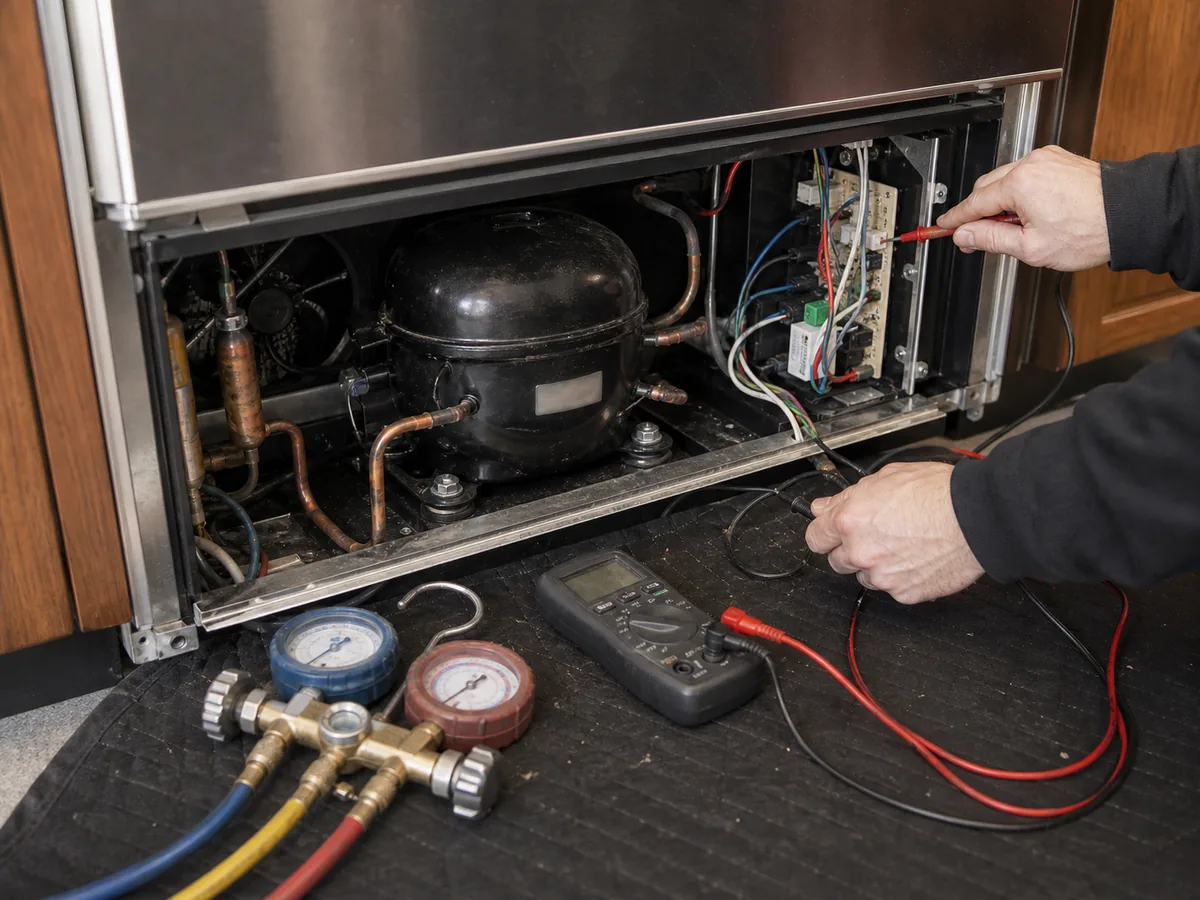
- Electrical, board, sealed
- Verification
- Model tag, not a generic list
Quick reference
Sub-Zero error codes & alarms list (Los Altos)
A plain-language list of the Sub-Zero alarms and display behaviors we see most in Los Altos kitchens. It is a reasoning aid, not a code dictionary — exact numbers differ by model and serial, so confirm the real code against your rating plate before acting.
| Alarm / display behavior | What it usually points to | What to do |
|---|---|---|
| Flashing or solid “Service” indicator | A stored fault, sensor input, or board condition — meaning varies by model family. | Photograph it, leave power on, and verify against your model and serial before any reset. |
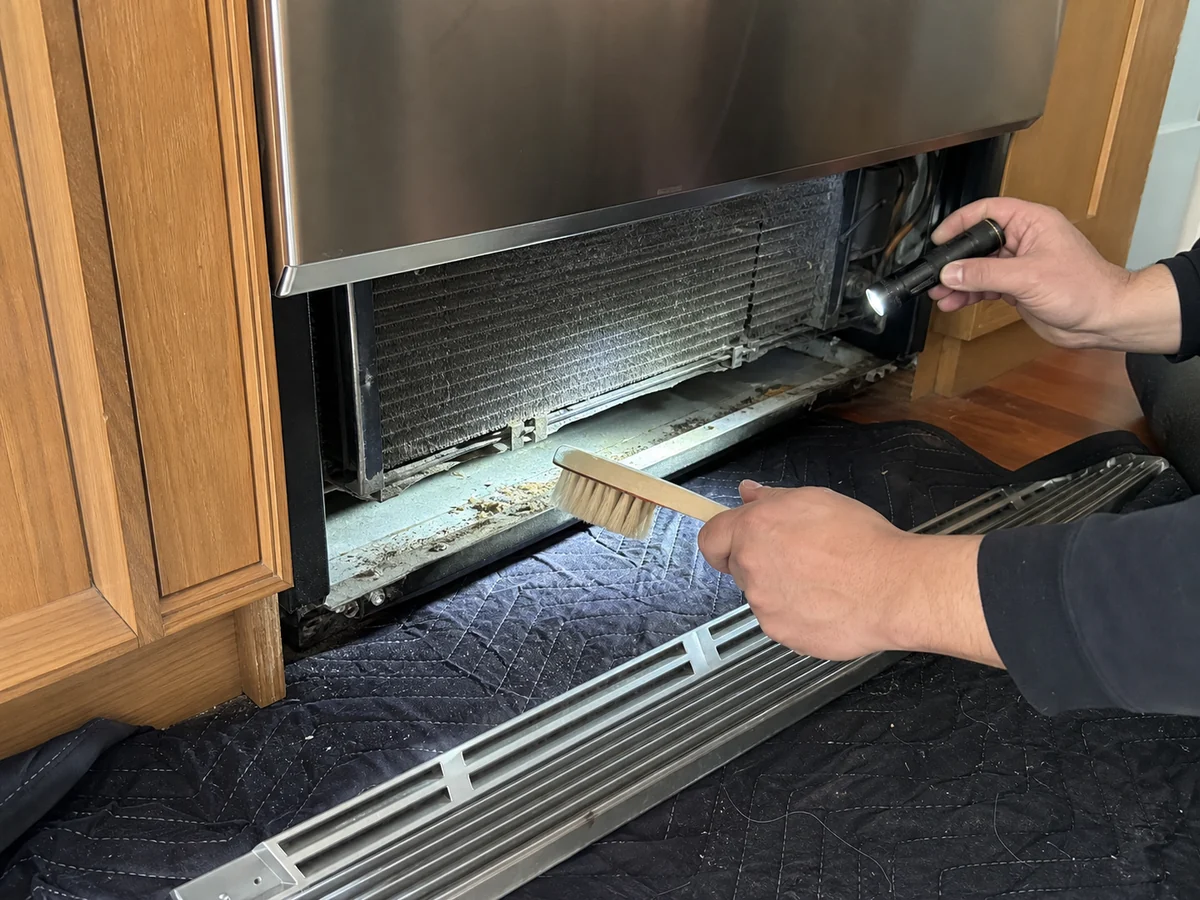
| “Vacuum Condenser” reminder or long run times | Condenser packed with dust or pet hair, worsened by Los Altos summer heat loading the unit. | Pull the lower grille, check the condenser, and re-probe cycling after a clean. |
| Over-temp / high-temp alarm after a long door-open | Normal recovery, or a marginal temperature sensor — common on warm Country Club afternoons. | Allow a full recovery cycle, then re-probe before replacing a thermistor. |
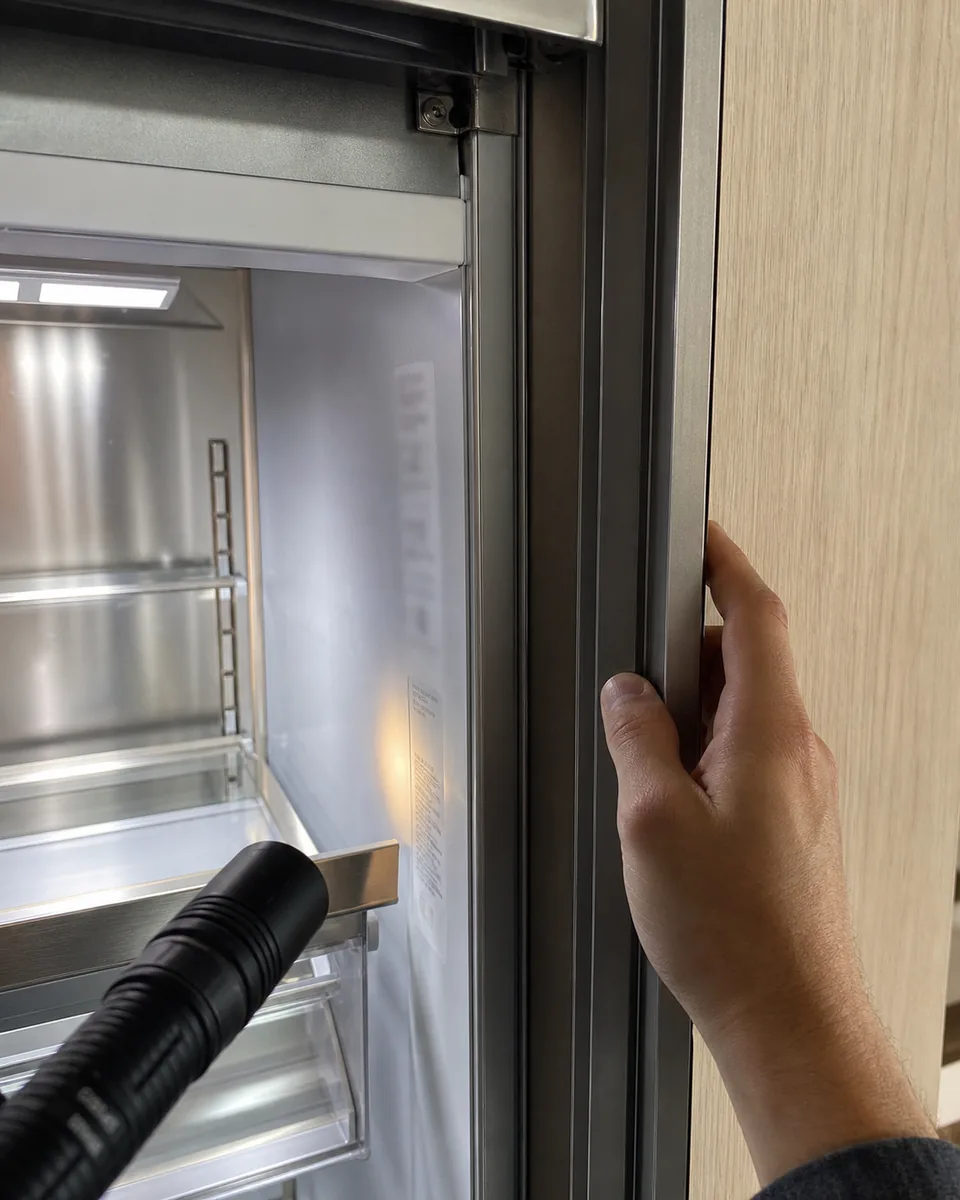
| Frost line or condensation at the door edge | Door gasket leak or seal swelling, often where foothill marine fog works the seals overnight. | Paper-drag test and seal inspection; OEM gasket or hinge adjustment. |
| Fresh-food warm while the freezer still holds | Evaporator fan, frosted coil, or air damper — not necessarily the sealed system. | Watch fan rotation and airflow; defrost, fan, or damper repair as measured. |
| Blank, frozen, or unresponsive display | Control board, ribbon connector, or power supply. | Confirm supply voltage; reseat or replace the confirmed board — avoid repeated power-cycling. |
Newer Sub-Zero models may show an EC-style electronic code; the meaning is model-specific, so read it against your model and serial rather than a generic chart. Call (650) 668-1043 before resetting.
What does a Sub-Zero error code or alarm mean in Los Altos?
A Sub-Zero alarm is a clue, so Los Altos Sub-Zero Appliance Repair reads the display code against your model family, serial break and actual compartment temperatures for Loyola Corners kitchens in 94022 rather than swapping a board on sight; dial (650) 668-1043 for a code-verified Los Altos visit.
Customer reviews
What Los Altos homeowners say
Our 648PRO showed a display code I could not interpret. They confirmed it pointed to the electronic control board for that serial, replaced it, and the alarm cleared with verified recovery temperatures. Calm and accurate throughout.
A freezer alarm turned out to be a defrost sensor rather than the major failure I feared. They sorted it the same day after checking the basics first, so nothing expensive was quoted. Honest and reassuring.
Technical warning
Safe homeowner checks
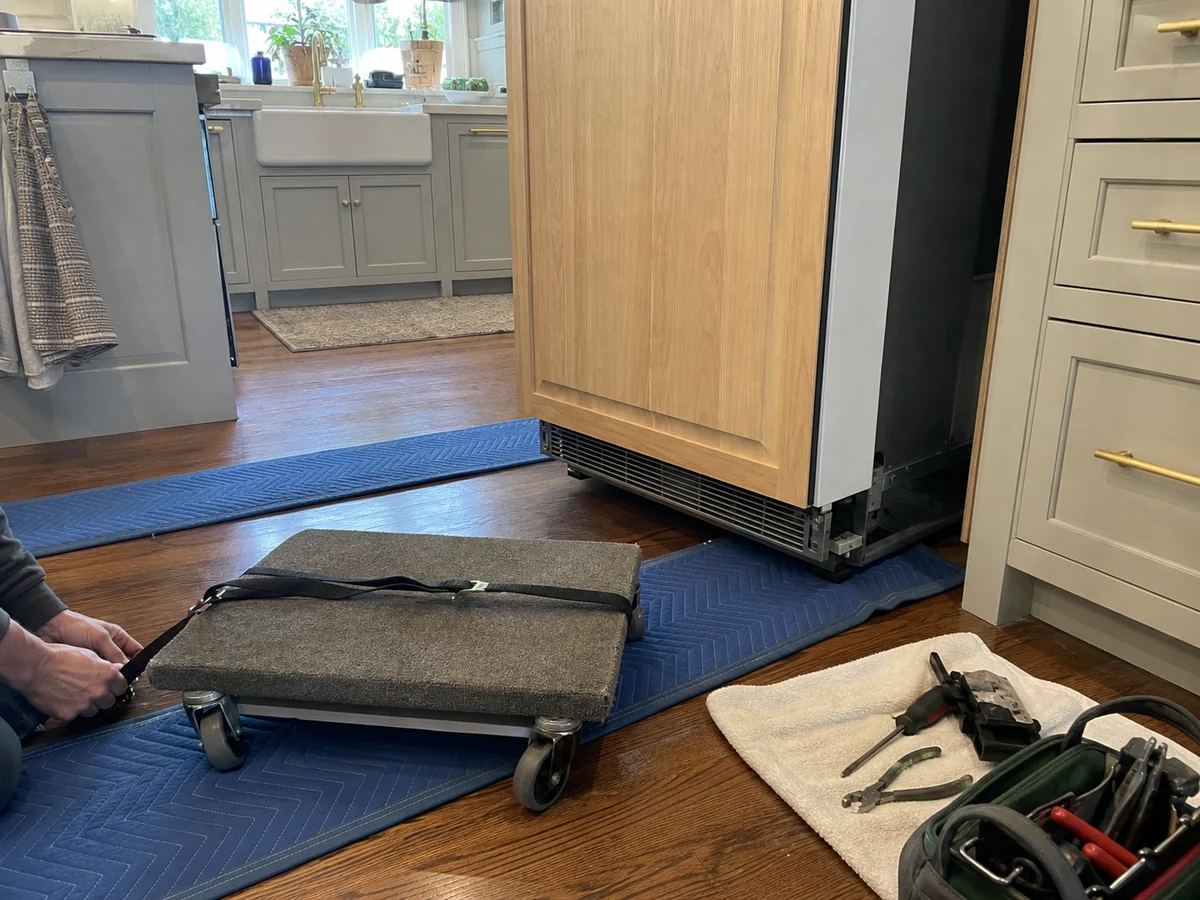
You can photograph the display, note which compartment is affected, check whether a door is fully closed, and record actual temperatures. You should not open electrical compartments, bypass switches, probe boards, or attempt refrigerant work. Control-board, gas, electrical, and sealed-system issues require a trained technician with the right tools and safety practices.
Model-specific reading
Alarm verification table
| Symptom | Possible component | Confirmation test | False positive to avoid | Repair path |
|---|---|---|---|---|
| Warm fresh-food side | Evaporator fan, thermistor, defrost | Airflow and frost pattern | Assuming compressor failure | Test fan/defrost path first |
| Freezer alarm | Door seal, defrost, sealed system | Temperature trend and frost pattern | Relying on display only | Verify compartment recovery |
| Door alarm | Switch, hinge, gasket, panel alignment | Door closure and switch test | Slamming door harder | Adjust or replace verified part |
| Display blank or dim | Display module or board | Voltage and connector check | Ordering by photo alone | Serial-matched component |
| Wine zone drift | Thermistor, fan, seal, control | Probe reading over time | Changing set point repeatedly | Component test and trend log |
| Ice maker alarm or failure | Fill valve, module, temperature issue | Fill and harvest observation | Forcing ice mechanism | Water/temperature path |
| Long run time | Dirty condenser, fan, sealed issue | Condenser temperature and airflow | Adding refrigerant without leak proof | Airflow before sealed work |
Verify by model and serial
Model family notes
BI and Classic
Verify door switches, defrost behavior, and compartment-specific symptoms before assuming a compressor problem.
Designer columns
Panel alignment and integrated installation can influence door and airflow alarms.
700 Series
Serial breaks matter for boards, fans, and some gasket paths.
Wine storage
Probe readings are more useful than a one-time display check.
PRO units
Heavy-duty compartments can make access and airflow checks more involved.
Pre-visit evidence
Alarm booking that helps the visit
Before booking, write down the exact display message as seen, the time it appeared, whether the door had been open, and the actual temperature in the affected compartment if you have a separate thermometer. Photograph the display, but do not rely on that image alone. A Los Altos built-in may have a panel alignment issue, a door switch that is not seeing closure, or a condenser airflow problem hidden behind the grille. Those details can create an alarm that looks electronic even when the first repair path is mechanical or airflow-related.
If the alarm follows a power event, say so. If it follows a heavy grocery load or party use, say that too. Context can prevent an unnecessary board quote.
Manual-style proof
Evidence photos for alarm pages
Visible Q&A
Questions this page answers
How much do alarm-related Sub-Zero repairs cost in Los Altos?
A door switch or sensor behind an alarm runs $185-$430, a temperature sensor $260-$580, and a defrost-related fault $360-$890. A confirmed electronic control board is $560-$1,450.
My freezer alarm went off during a Los Altos heat wave — is it the compressor?
Not necessarily. Summer heat on a dust-packed condenser, a long door-open event, or a defrost sensor often triggers an alarm. Actual temperatures and the model decide the repair, not the alarm alone.
What temperatures should I record with the alarm?
Note each compartment in °F, with the fresh-food side near 38°F and the freezer near 0°F, so the code is checked against real cooling instead of the display alone.
Can you tell the exact repair from an alarm photo?
Usually no. The photo helps route the visit, but model family and confirmation tests decide the repair.
Should I unplug the unit to clear the alarm?
Only if safety or food handling requires it. A reset can erase clues, especially frost pattern and recovery behavior.
Are Sub-Zero codes the same for every model?
No. The same code can mean different parts across model families, so the model and serial are verified before any part is quoted.
Price table
Alarm and error-code repair costs in Los Altos
An alarm is a clue, not a part number. Once the code is read against the model and actual temperatures, these are the common repairs it points to.
| Service | What it covers | Price range | Time |
|---|---|---|---|
| Diagnostic visit (alarm read) | Code read against model and real temperatures | $185-$295 | 45-90 min |
| Door switch / sensor | Door-event or switch fault | $185-$430 | 1 hr |
| Thermistor / temperature sensor | Sensor drift triggering alarms | $260-$580 | 1-2 hrs |
| Defrost sensor / system | Defrost-related alarm | $360-$890 | 1-3 hrs |
| Electronic control board | Control fault confirmed by test | $560-$1,450 | 1-4 hrs |
What sets the final price: what the code means for your specific model and serial, and which sensor, door, defrost, or board evidence confirms it.
Step by step
How to respond to a Sub-Zero alarm safely
An alarm is a starting clue. These steps capture what a technician needs to read it correctly for your model.
- Photograph the display. Capture the exact code or message and the time you first saw it.
- Record real temperatures. Read each compartment in °F so the alarm can be checked against actual cooling.
- Check the door and recent events. Note any long door-open, power loss, or large grocery load that can trigger an alarm.
- Avoid repeated resets. Do not keep clearing the alarm, which erases the pattern a technician needs.
- Match the code to the model. The same code can mean different parts across model families, so confirm model and serial.
Service facts
Alarm and code facts
- A Sub-Zero alarm is a clue, not a part number; the same code can mean different parts across model families.
- Alarm-related repairs in Los Altos commonly run $185-$890 for door, sensor, or defrost faults before a $560-$1,450 control board.
- Read the code against actual temperatures in °F and the model and serial before approving any part.
What to expect
What not to guess from this page
Sub-Zero alarms are clues, not a universal parts chart should not be converted into a parts quote from one sentence. A Los Altos built-in Sub-Zero refrigerator can sit inside older custom millwork, panel-ready doors, floor transitions, and service openings that change labor and risk. The first test is evidence collection: model and serial number, actual temperatures, a wide cabinet photo, a close symptom photo, and a short note about neighborhood access.
The price changes when the model family, serial break, cabinet movement, water-line access, or sealed-system evidence changes. The estimate reflects your specific unit, not a universal parts chart.
Service planning addendum
Model-first addendum for Los Altos service planning
Los Altos Sub-Zero repair starts with the same evidence sequence even when the visible symptom is different: identify the model and serial number, separate the affected compartment, record actual temperatures, photograph the cabinet opening, and preserve the symptom before resets or cleaning erase it. That sequence gives homeowners and service coordinators a practical method instead of a vague repair-shop promise.
The first test is different by symptom. A warm fresh-food side points first to airflow, evaporator fan, defrost, thermistor, gasket, and cabinet ventilation. A frost line points first to gasket profile, hinge or panel alignment, and cabinet interference. Hollow cubes point first to freezer temperature, fill tube, inlet valve, filter, and water pressure. A display alarm points first to actual temperatures, door events, sensor readings, and model-specific control logic. A suspected compressor or sealed-system failure is the high-cost exception and belongs after basic evidence is documented.
| Evidence to collect | Why it changes the quote | Related hub |
|---|---|---|
| Model and serial number | Serial breaks can change gaskets, boards, fans, valves, sensors, and sealed-system parts. | Model-first diagnostic |
| Actual compartment temperatures | Fresh-food warm/freezer cold is a different path from both compartments warm. | Not-cooling hub |
| Wide cabinet photo | Panel-ready doors, floor transitions, toe-kicks, and trim change access and labor. | Cabinet-safe hub |
| Close symptom photo | Frost, alarm, hollow ice, condenser dust, or water clues prevent generic parts guesses. | Cost hub |
| Neighborhood and access notes | Old Los Altos, North Los Altos, Country Club, Loyola Corners, Woodland Acres, Highlands, and South of El Monte have different route and access constraints. | Route notes |
Use this addendum as the cross-check before quoting. If the page topic is Sub-Zero alarms are clues, not a universal parts chart, the answer should still explain what evidence is missing, what can be tested safely, what should not be promised by phone, and where the final quote depends on model/access/part proof.