 Los Altos Sub-Zero Appliance Repair
Both compartments warmed up during a heat wave. They checked condenser airflow first, and a coil cleaning and fan check brought it back to temperature that same day. No expensive parts were ever pushed on us.
Home / When a Sub-Zero is not cooling, split the symptom by compartment
Sub-Zero firstLos AltosSymptom guide
When a Sub-Zero is not cooling, split the symptom by compartment
A Los Altos Sub-Zero that is not cooling should be described by zone: fresh-food warm while freezer holds, freezer warm, both compartments warm, wine zone drifting, or ice maker failing because temperature is high. That compartment split changes the first test. The technician checks airflow, condenser load, frost pattern, door seal, thermistors, fans, and sealed-system indicators before quoting expensive work.
- First split
- Which compartment?
- Simple causes
- Airflow, gasket, defrost
- Expensive path
- Verified sealed system
What temperature counts as a Sub-Zero not cooling in Los Altos, and what should I check?
Target roughly 38°F fresh-food and 0°F freezer; when Highlands readings climb past those, Los Altos Sub-Zero Appliance Repair splits the warm compartment and inspects condenser airflow before sealed-system work throughout 94022. Book a same-week Los Altos diagnostic at (650) 668-1043 before parts get guessed.
Customer reviews
What Los Altos homeowners say
Fresh-food sat at 47°F while the freezer held just fine. A methodical split of the two zones pointed straight to the evaporator fan, and once it was replaced the cabinet returned to 37°F. They found the real fault quickly.
Freezer warmed first, with frost building on the back wall. The defrost system repair fixed it, and they documented the recovery temperatures so I knew it was genuinely sorted. Great communication the whole way.
Fresh-food, freezer, both, or wine
Define the symptom before touching parts
Normal behavior is a unit that cycles, recovers after door openings, and holds the set temperature within a reasonable range for its model and compartment. Abnormal behavior is a compartment that keeps climbing, a freezer that builds a frost wall, a fan that never moves air, or a compressor that runs while temperatures do not recover. If food is unsafe, move it first. If the unit is stable enough to inspect, photograph the temperature and affected zone before resetting.
Simple to expensive
Ranked diagnostic list
| Cause | Signs | Test | Typical repair |
|---|---|---|---|
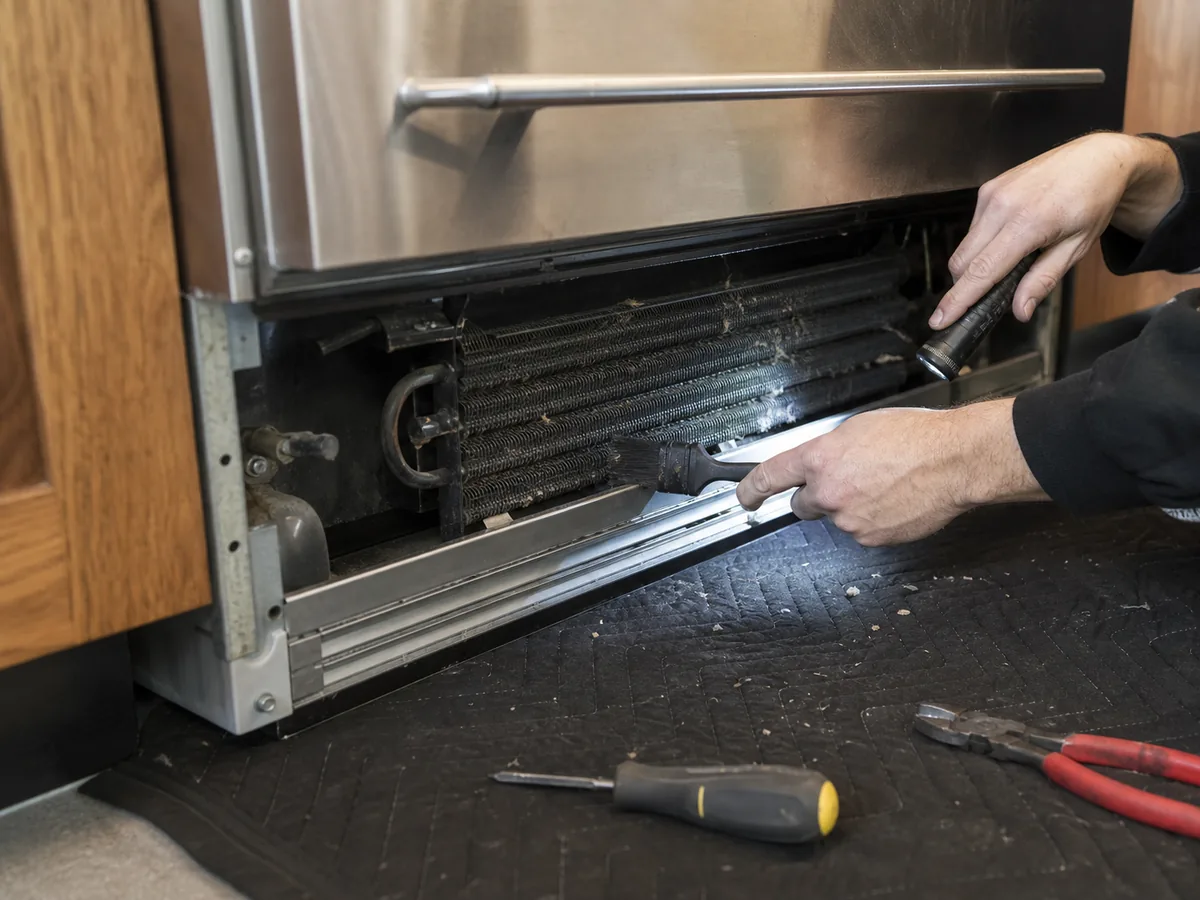
| Dirty condenser | Long run time, warm grille area | Visual coil and airflow check | Clean coil and verify fan |
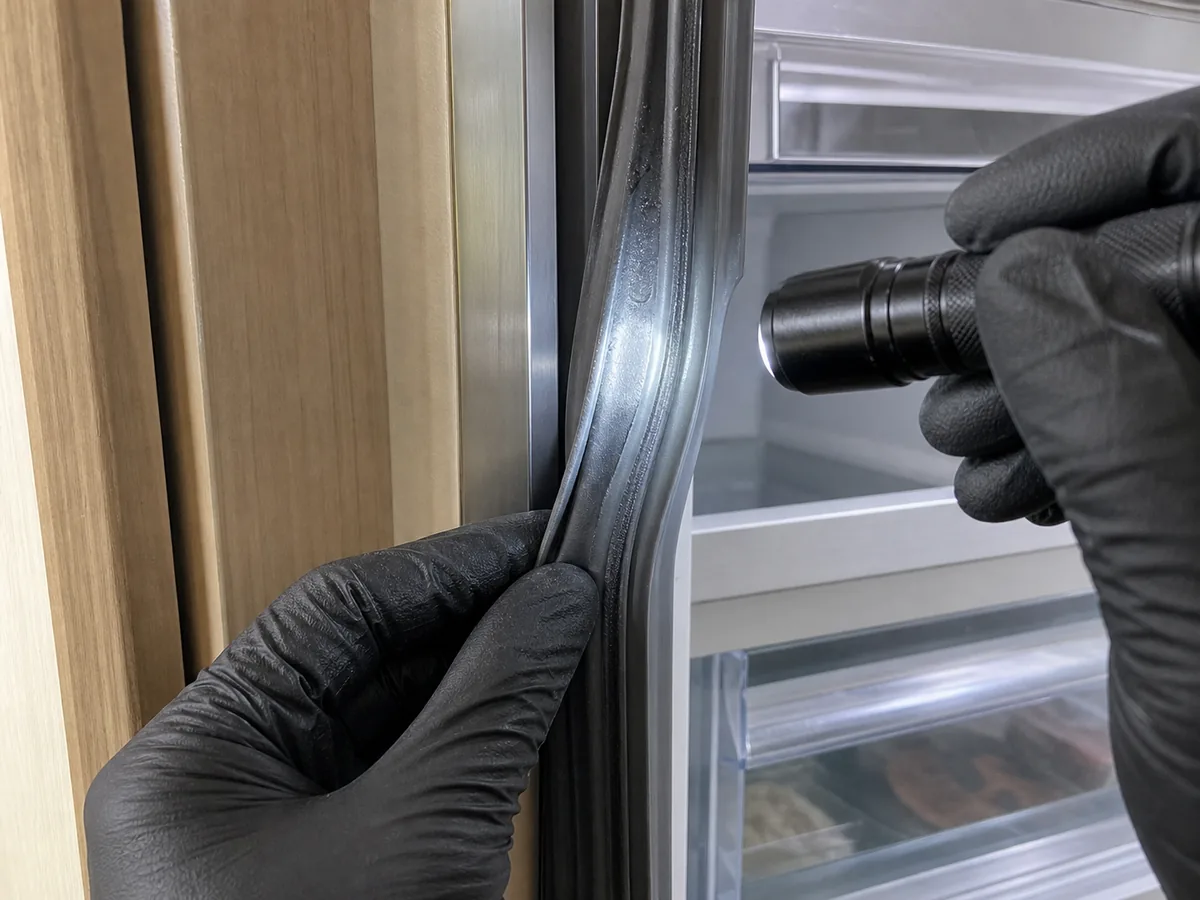
| Door gasket or alignment | Condensation, frost line, easy door pull | Light/flashlight and seal inspection | Gasket or hinge/alignment work |
| Evaporator fan failure | One zone warm, weak airflow | Fan operation and voltage check | Replace serial-matched fan |
| Defrost failure | Frost wall, airflow blocked | Heater, thermostat, sensor path | Repair defrost component |
| Thermistor or control reading | Display differs from actual temperature | Probe comparison and board data | Replace verified sensor or board |
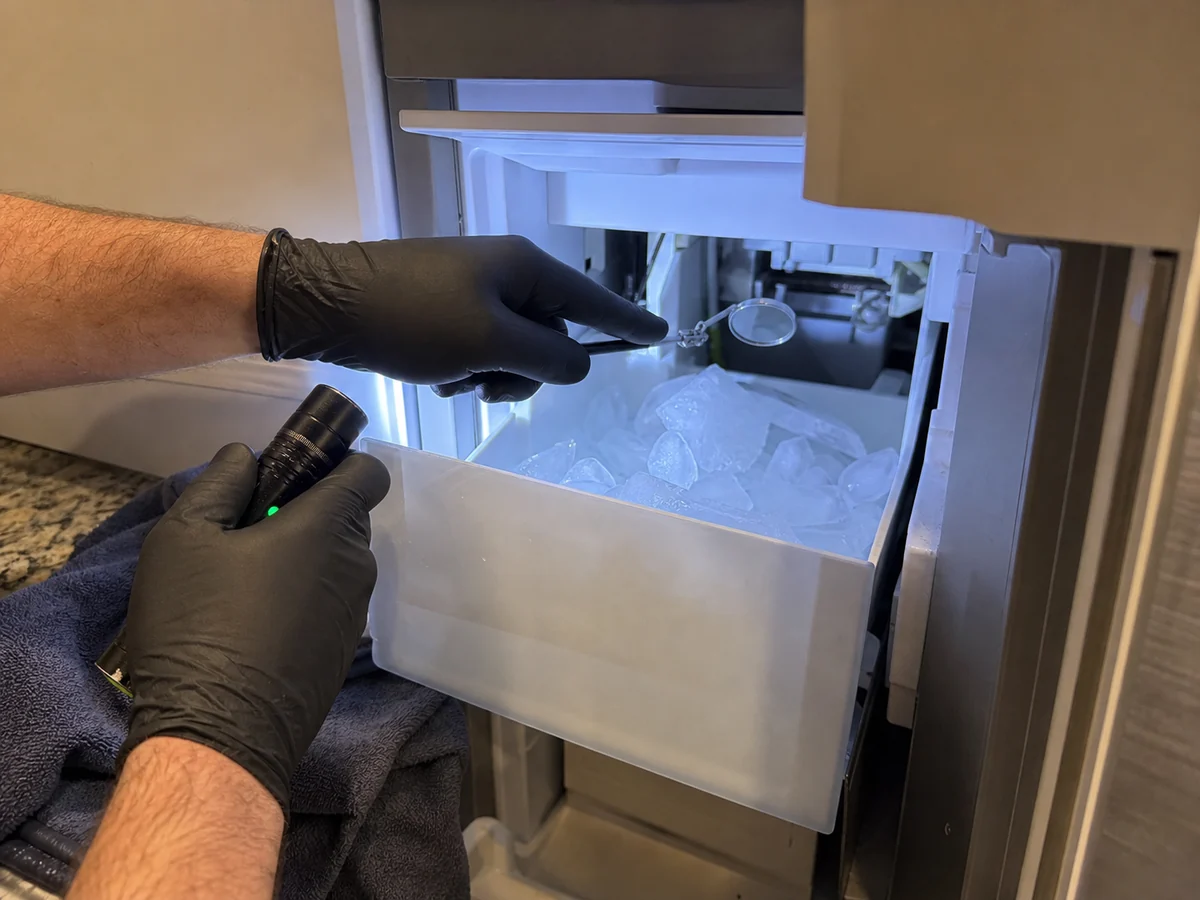
| Water/ice related temperature issue | Slow ice and warm freezer symptoms together | Ice fill and compartment temp check | Repair water or ice path after temp correction |
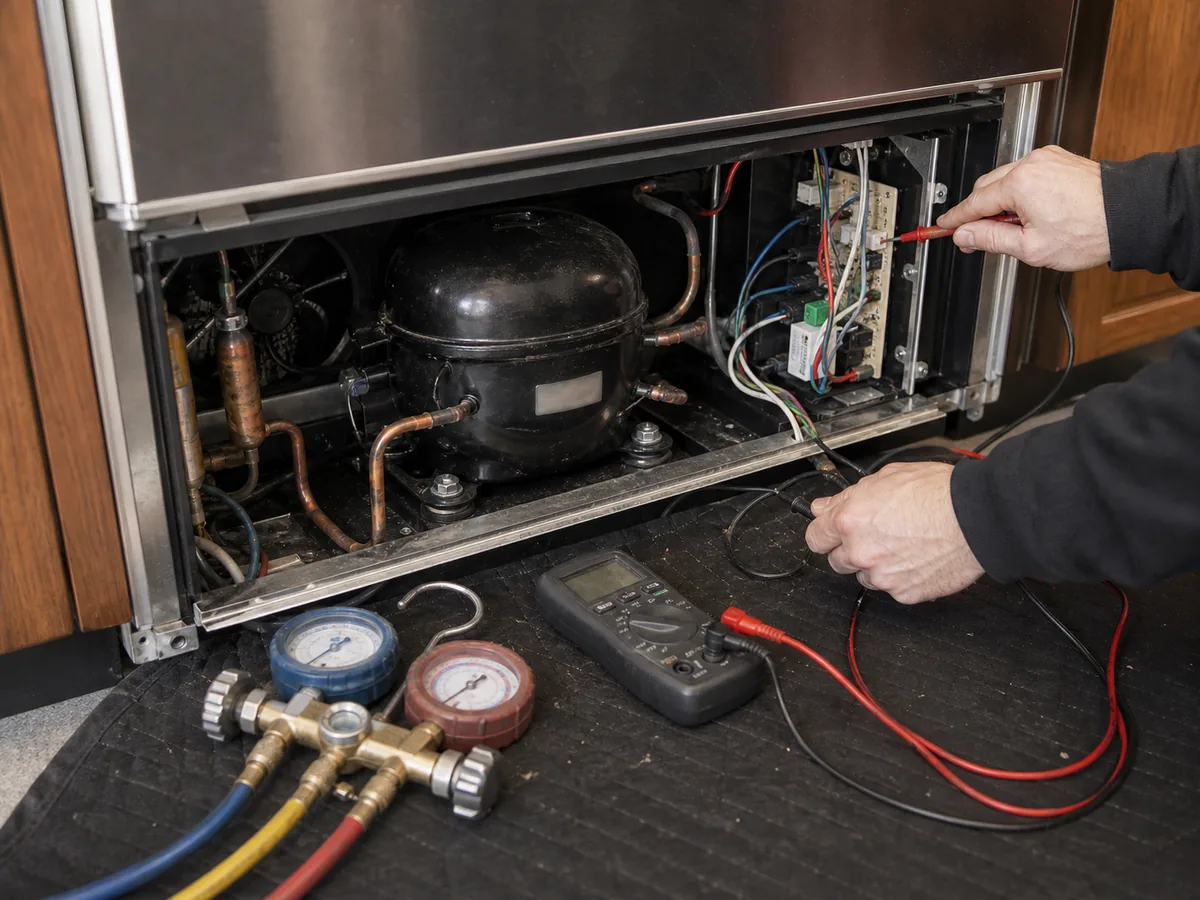
| Sealed-system suspicion | Poor recovery after basic tests pass | EPA-sensitive pressure/leak verification | Quote sealed-system work only after proof |
Why access matters
Local context for Los Altos built-ins
Old Los Altos homes may hide an older built-in behind newer panels, so the appliance age and cabinet work are both part of the booking. North Los Altos family kitchens often show heavy use: frequent door openings, packed shelves, and condenser load from dust or pet hair. In Country Club and foothill homes, longer route windows and custom panels make pre-visit model-tag photos especially useful. The local lesson is that a cooling failure should be staged carefully, not rushed through as a generic refrigerator call.
Evidence row
Cooling proof photos
Visible Q&A
Questions this page answers
What temperatures mean my Sub-Zero is really not cooling?
Normal targets are about 38°F in the fresh-food section and 0°F in the freezer. A fresh-food reading above 42°F, or a freezer above 5°F for several hours, warrants a diagnostic.
How much does a not-cooling repair cost in Los Altos?
Most run $185-$890: condenser cleaning $185-$420, an evaporator fan $340-$760, or a defrost repair $360-$890. Sealed-system work is the $1,800-$4,800 exception, quoted only after airflow tests.
Why is the refrigerator warm while the freezer is still cold?
That pattern often points to airflow, evaporator fan, defrost, sensor, or door-seal issues before it points to a total sealed-system failure.
Should I defrost it myself?
If food is safe, take photos first. A full defrost can remove evidence that helps identify the failed component.
When is sealed-system work suspected?
When basic airflow, fan, defrost, control, and seal checks do not explain poor recovery, a technician verifies sealed-system indicators with proper equipment.
What should I have ready?
Have temperatures, the model tag, the affected compartment, and photos of frost, gasket, or condenser access if available.
Price table
What a not-cooling fix costs in Los Altos
Ranges for the most common causes of a Sub-Zero that will not hold temperature, ordered from least to most expensive. Airflow is always checked before sealed-system work.
| Service | What it covers | Price range | Time |
|---|---|---|---|
| Diagnostic visit | Compartment split, temperature and airflow readings | $185-$295 | 45-90 min |
| Condenser cleaning & airflow | Coil clean, condenser fan, recovery test | $185-$420 | 1-2 hrs |
| Evaporator fan motor | Restores fresh-food airflow | $340-$760 | 1-2 hrs |
| Defrost system | Heater, thermostat, or defrost sensor | $360-$890 | 1-3 hrs |
| Thermistor / temperature sensor | Drift causing poor control | $260-$580 | 1-2 hrs |
| Sealed system / compressor | Leak, recharge, or compressor | $1,800-$4,800 | 3-8 hrs |
What sets the final price: the symptom split, condenser condition, fan and defrost evidence, and recovery readings taken after the repair.
Step by step
The Sub-Zero not-cooling diagnostic sequence
This is the order a technician works a no-cool call, cheapest checks first, so expensive parts are never quoted blind. If the sequence ends at the sealed system, bring a homeowner's checklist for EPA 608 verification to the appointment.
- Split by compartment. Separate fresh-food warm, freezer warm, or both warm to choose the first test.
- Verify airflow and condenser. Inspect the condenser coil and confirm the condenser fan runs before anything else.
- Test the evaporator fan and defrost. Check fan operation and the frost pattern that points to defrost or airflow faults.
- Compare sensor readings. Probe actual temperatures against the display to catch thermistor drift.
- Only then weigh sealed-system work. Consider leak or compressor diagnosis only after basic evidence fails to explain poor recovery.
Service facts
Not-cooling diagnostic facts
- A Sub-Zero freezer should hold near 0°F and the fresh-food section near 38°F; sustained readings above 42°F warrant a diagnostic.
- Condenser airflow is checked before any sealed-system quote, because a dirty coil imitates a failing compressor.
- Common not-cooling repairs in Los Altos run $185-$890 before sealed-system work, which starts at $1,800.
What to expect
What not to guess from this page
When a Sub-Zero is not cooling, split the symptom by compartment should not be converted into a parts quote from one sentence. A Los Altos built-in Sub-Zero refrigerator can sit inside older custom millwork, panel-ready doors, floor transitions, and service openings that change labor and risk. The first test is evidence collection: model and serial number, actual temperatures, a wide cabinet photo, a close symptom photo, and a short note about neighborhood access.
The price changes when the model family, serial break, cabinet movement, water-line access, or sealed-system evidence changes. The estimate reflects your specific unit, not a universal parts chart.
Service planning addendum
Model-first addendum for Los Altos service planning
Los Altos Sub-Zero repair starts with the same evidence sequence even when the visible symptom is different: identify the model and serial number, separate the affected compartment, record actual temperatures, photograph the cabinet opening, and preserve the symptom before resets or cleaning erase it. That sequence gives homeowners and service coordinators a practical method instead of a vague repair-shop promise.
The first test is different by symptom. A warm fresh-food side points first to airflow, evaporator fan, defrost, thermistor, gasket, and cabinet ventilation. A frost line points first to gasket profile, hinge or panel alignment, and cabinet interference. Hollow cubes point first to freezer temperature, fill tube, inlet valve, filter, and water pressure. A display alarm points first to actual temperatures, door events, sensor readings, and model-specific control logic. A suspected compressor or sealed-system failure is the high-cost exception and belongs after basic evidence is documented.
| Evidence to collect | Why it changes the quote | Related hub |
|---|---|---|
| Model and serial number | Serial breaks can change gaskets, boards, fans, valves, sensors, and sealed-system parts. | Model-first diagnostic |
| Actual compartment temperatures | Fresh-food warm/freezer cold is a different path from both compartments warm. | Not-cooling hub |
| Wide cabinet photo | Panel-ready doors, floor transitions, toe-kicks, and trim change access and labor. | Cabinet-safe hub |
| Close symptom photo | Frost, alarm, hollow ice, condenser dust, or water clues prevent generic parts guesses. | Cost hub |
| Neighborhood and access notes | Old Los Altos, North Los Altos, Country Club, Loyola Corners, Woodland Acres, Highlands, and South of El Monte have different route and access constraints. | Route notes |
Use this addendum as the cross-check before quoting. If the page topic is When a Sub-Zero is not cooling, split the symptom by compartment, the answer should still explain what evidence is missing, what can be tested safely, what should not be promised by phone, and where the final quote depends on model/access/part proof.
Related reading
Worth a look before you book in Los Altos
- Wine storage temperature drift - zone-swing evidence for wine columns that will not hold the collector setting.
- Gasket frost lines and cabinet-air leaks - why a frost line is a seal question before it is a parts question.
- Cabinet-safe service for built-in refrigerators - how diagnosis happens without risking the millwork.
- Planning ranges for Los Altos Sub-Zero repairs - what each not-cooling outcome tends to involve.