 Los Altos Sub-Zero Appliance Repair
Our 427 wine column had drifted to 61°F off a 55°F set point. They logged the readings, then recalibrated and replaced the zone sensor, and it now holds 55°F steadily. They clearly knew wine storage specifically.
Home / Wine storage temperature drift needs proof, not set-point guessing
Sub-Zero firstLos AltosWine column page
Wine storage temperature drift needs proof, not set-point guessing
A Sub-Zero wine column that drifts several degrees can look normal when the door is opened and still be wrong for storage. Los Altos homes with wine walls, integrated columns, and sun-facing kitchens need temperature evidence over time. The service path checks probe readings, airflow, door seal, condenser load, thermistor behavior, and model-specific controls before replacing parts.
- Symptom
- Several-degree drift
- Proof
- Probe and trend
- Parts
- Sensor, fan, seal, board
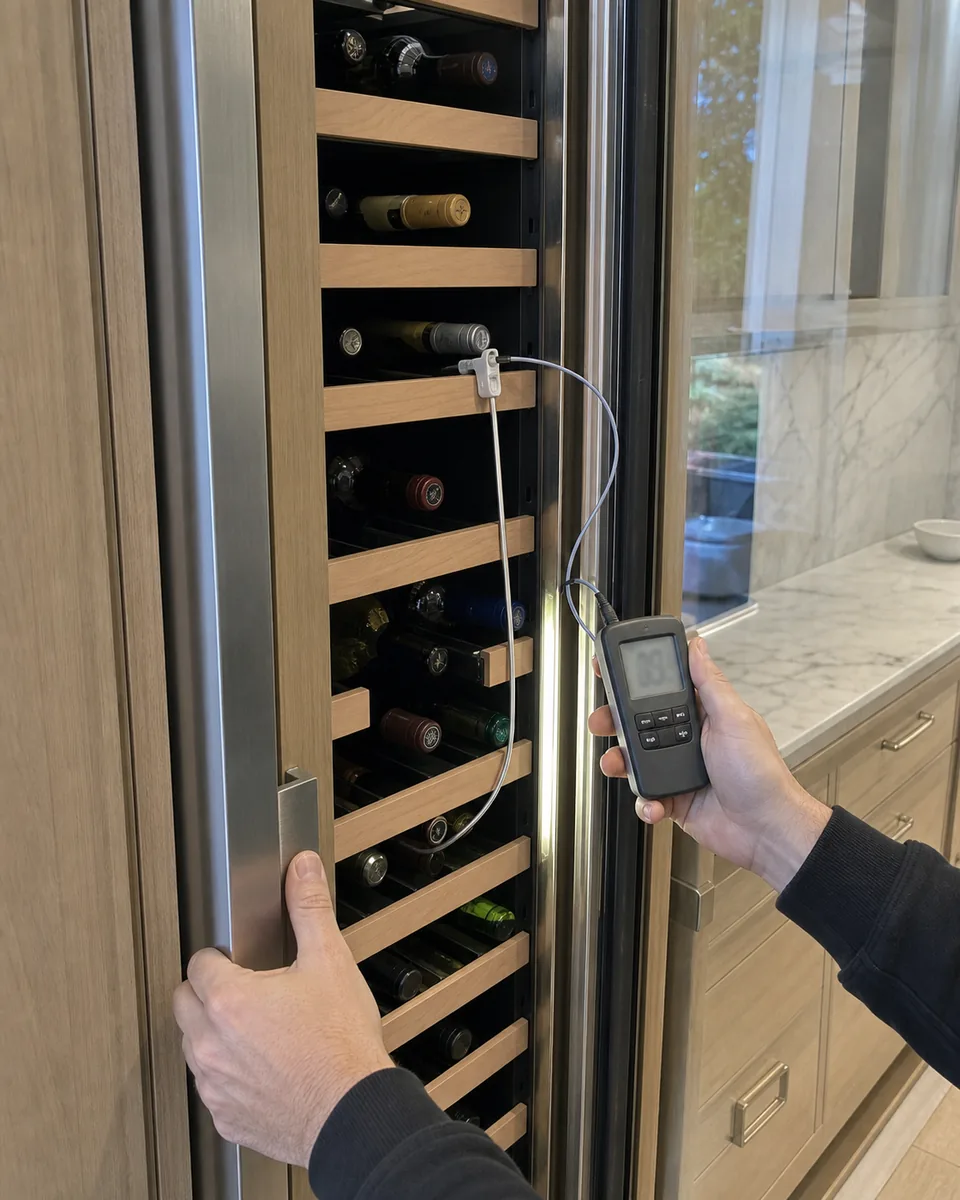
Why does my Sub-Zero wine column in Los Altos keep drifting off its set point?
Sub-Zero wine zones sit near 55°F, and a drift beyond about 6°F means Los Altos Sub-Zero Appliance Repair logs the probe trend, then checks the zone sensor, fan and glass-door seal for Old Los Altos collectors in 94022. Reach (650) 668-1043 to steady your Los Altos cellar.
Customer reviews
What Los Altos homeowners say
A 424 wine unit with one warm zone, sitting against a sunny wall. Replacing the wine-zone fan motor restored the airflow that zone was missing. They verified the temperature hold over a full hour before calling it done.
Temperature swings on our 315 wine column came down to a tired glass-door seal letting warm air in. The door-seal repair stopped the leak and the collection is back at the right temperature. A precise diagnosis.
Specialized context
Why this is not generic refrigerator repair
Wine storage is about stability, not only cold air. A fresh-food refrigerator can recover from brief door openings and still satisfy the owner. A wine column may need tighter control, more careful airflow review, and better documentation. Sub-Zero wine storage also uses model-specific control logic, fans, thermistors, glass door sealing, and cabinet ventilation that should not be treated like a compact beverage cooler.
In Los Altos, wine columns often sit near bright kitchen glazing, pantries, or entertainment spaces. That local install condition can influence how often the door opens, how the condenser breathes, and whether the zone sees radiant heat.
Failure cards
Five drift patterns
Top zone runs warmer
Diagnosis: airflow path, thermistor placement, fan operation, and door seal. Quote changes: part access and serial match.
Both zones slowly climb
Diagnosis: condenser load, compressor run time, and cabinet ventilation. Quote changes: whether cleaning restores recovery.
Display says one thing, probe says another
Diagnosis: sensor or control reading drift. Quote changes: model family and board availability.
Humidity or condensation at glass
Diagnosis: gasket, hinge alignment, and ambient conditions. Quote changes: seal condition and panel alignment.
Alarm after power event
Diagnosis: logged fault, actual temperature, and recovery behavior. Quote changes: verified component, not the alarm label alone.
Customer decision
What to do before scheduling
- Record the set point and the actual reading if you have a separate thermometer.
- Photograph the model tag and the cabinet opening.
- Do not keep changing the set point during the same drift event.
- If bottles are warming rapidly, move valuable bottles before waiting for an appointment.
Field service photos
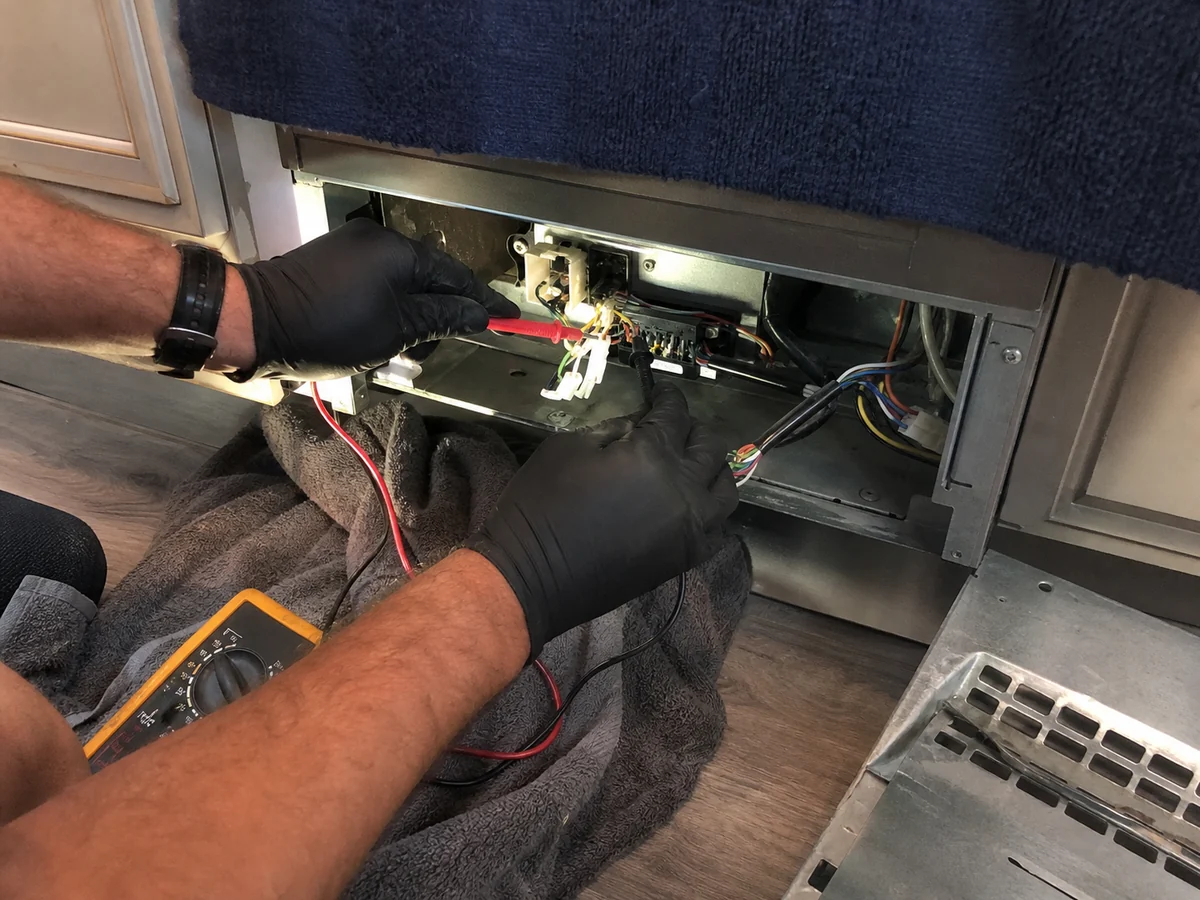
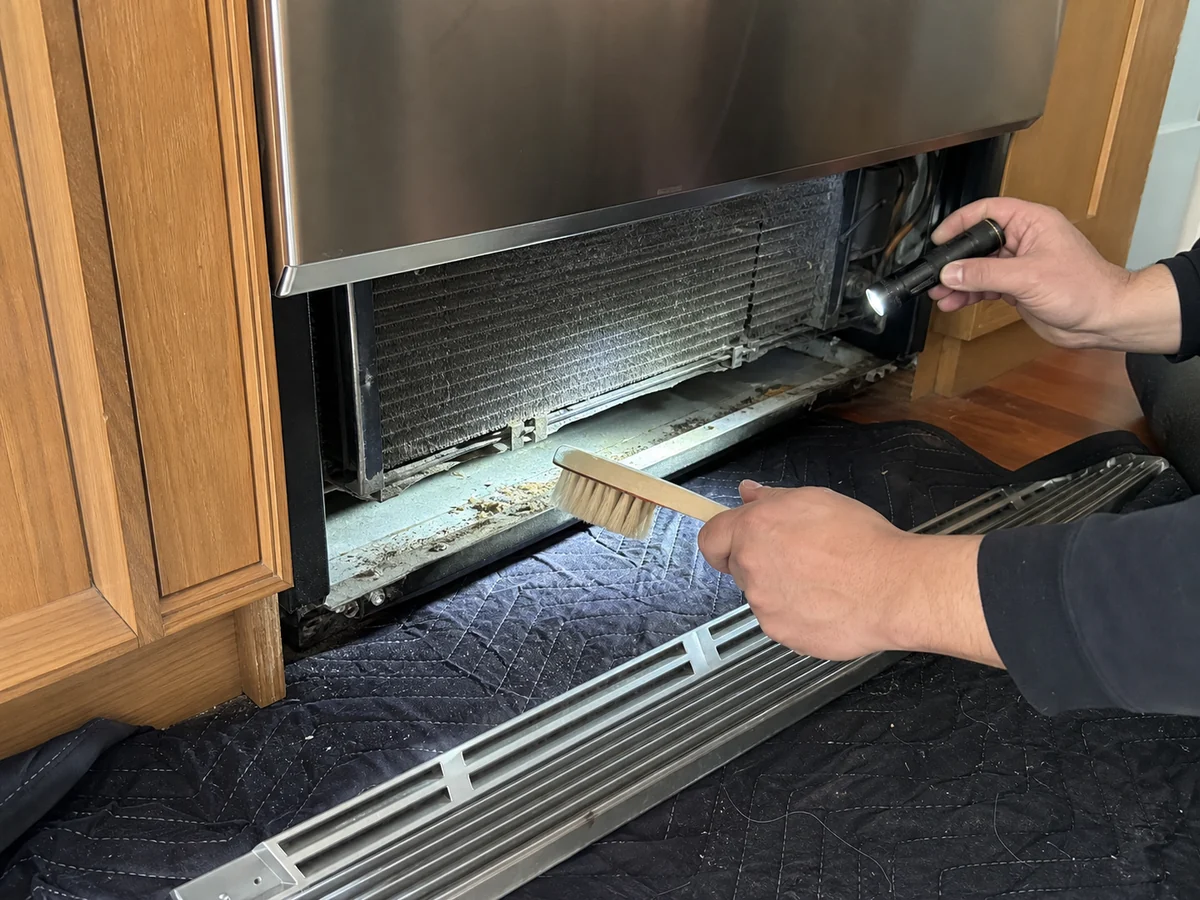
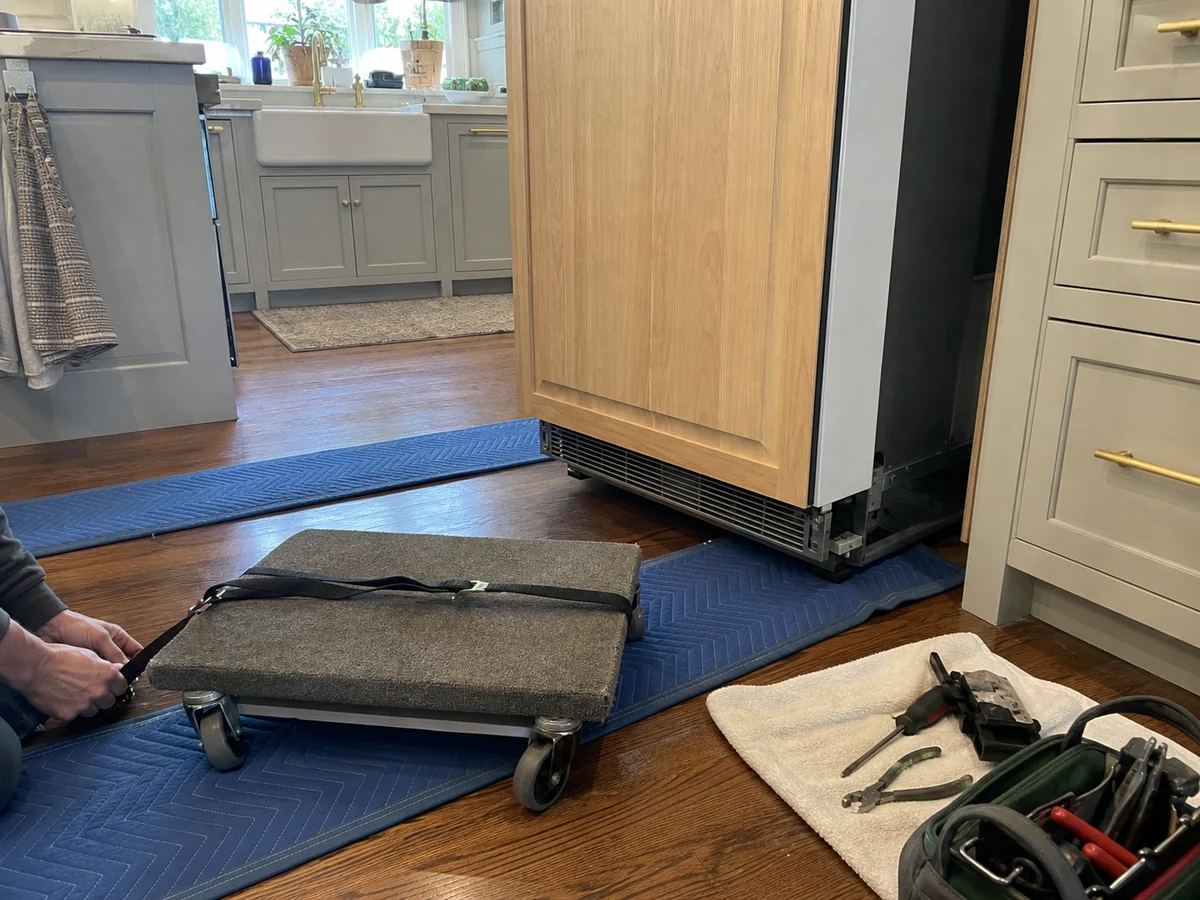
Photo evidence, not decoration
Neighborhood context
Local proof notes
Old Los Altos remodels can place wine storage near older ventilation paths. North Los Altos family kitchens often have heavy entertainment use, so door-open patterns matter. Country Club and Loyola Corners homes may use taller integrated wine columns, where panel alignment and condenser breathing are part of the diagnosis. These are service factors, not keyword decorations.
Visible Q&A
Questions this page answers
What temperature should a Sub-Zero wine zone hold?
Most Sub-Zero wine zones are set near 55°F. A drift of more than about 6°F from the set point usually points to a sensor, airflow, or door-seal fault rather than something a reset will fix.
How much does wine-zone repair cost in Los Altos?
Wine-zone sensor or calibration work typically runs $295-$880 and a wine-zone fan motor $295-$640. A glass-door seal is about $360-$760, and a confirmed control board is $560-$1,450.
Does a sunny Los Altos kitchen affect my wine column?
Yes. Bright glazing and nearby ovens add radiant heat load, so a column on a sunny wall can drift. Airflow and the glass-door seal ($360-$760) are checked when placement raises the zone.
Can I reset a drifting wine column?
A reset may clear a nuisance alarm, but it can also hide a trend. Record actual temperatures in °F first if the collection is safe.
Does a wine column need sealed-system work?
Sometimes, but airflow, sensors, seals, and condenser load should be checked before assuming that expensive path.
What photo helps most?
A model tag photo and a clear picture of the column opening help identify the exact part path and access constraints.
Price table
Wine storage repair costs in Los Altos
Wine columns need tighter control than a refrigerator. These planning ranges cover the drift, airflow, and seal faults behind a zone that will not hold its set point.
| Service | What it covers | Price range | Time |
|---|---|---|---|
| Diagnostic visit (wine zone) | Probe readings, airflow and seal check | $185-$295 | 45-90 min |
| Wine zone sensor / calibration | Probe check, recalibrate, verify hold | $295-$880 | 1-3 hrs |
| Wine zone fan motor | Airflow restored to the zone | $295-$640 | 1-2 hrs |
| Glass-door seal / gasket | Stops warm-air leak at the door | $360-$760 | 1-2 hrs |
| Control board (wine) | Zone control fault confirmed by test | $560-$1,450 | 1-4 hrs |
What sets the final price: how far the zone drifts from set point, nearby kitchen heat and glazing, and whether the fault is sensor, airflow, or seal.
Step by step
How to verify a drifting wine zone
Wine columns need stability, not just cold. These steps confirm a real drift and point to sensor, airflow, or seal.
- Record set point and actual. Note the set temperature and the actual reading in °F, plus how far it swings.
- Log the trend. Track the reading over a few hours rather than reacting to one number.
- Check the door seal. Inspect the glass-door gasket for warm-air leaks that raise the zone.
- Note nearby heat. Flag bright glazing, ovens, or a sunny wall that adds radiant load to the column.
- Leave the set point alone. Stop changing the setting before the actual temperatures are logged for the technician.
Service facts
Wine storage facts
- Most Sub-Zero wine zones are set near 55°F; a drift beyond about 6°F points to sensor, airflow, or door-seal faults.
- Wine-zone repairs in Los Altos typically run $295-$880 before any control-board work.
- Bright kitchen glazing and nearby heat add radiant load, so column placement affects how often a zone drifts.
What to expect
What not to guess from this page
Wine storage temperature drift needs proof, not set-point guessing should not be converted into a parts quote from one sentence. A Los Altos built-in Sub-Zero refrigerator can sit inside older custom millwork, panel-ready doors, floor transitions, and service openings that change labor and risk. The first test is evidence collection: model and serial number, actual temperatures, a wide cabinet photo, a close symptom photo, and a short note about neighborhood access.
The price changes when the model family, serial break, cabinet movement, water-line access, or sealed-system evidence changes. The estimate reflects your specific unit, not a universal parts chart.
Service planning addendum
Model-first addendum for Los Altos service planning
Los Altos Sub-Zero repair starts with the same evidence sequence even when the visible symptom is different: identify the model and serial number, separate the affected compartment, record actual temperatures, photograph the cabinet opening, and preserve the symptom before resets or cleaning erase it. That sequence gives homeowners and service coordinators a practical method instead of a vague repair-shop promise.
The first test is different by symptom. A warm fresh-food side points first to airflow, evaporator fan, defrost, thermistor, gasket, and cabinet ventilation. A frost line points first to gasket profile, hinge or panel alignment, and cabinet interference. Hollow cubes point first to freezer temperature, fill tube, inlet valve, filter, and water pressure. A display alarm points first to actual temperatures, door events, sensor readings, and model-specific control logic. A suspected compressor or sealed-system failure is the high-cost exception and belongs after basic evidence is documented.
| Evidence to collect | Why it changes the quote | Related hub |
|---|---|---|
| Model and serial number | Serial breaks can change gaskets, boards, fans, valves, sensors, and sealed-system parts. | Model-first diagnostic |
| Actual compartment temperatures | Fresh-food warm/freezer cold is a different path from both compartments warm. | Not-cooling hub |
| Wide cabinet photo | Panel-ready doors, floor transitions, toe-kicks, and trim change access and labor. | Cabinet-safe hub |
| Close symptom photo | Frost, alarm, hollow ice, condenser dust, or water clues prevent generic parts guesses. | Cost hub |
| Neighborhood and access notes | Old Los Altos, North Los Altos, Country Club, Loyola Corners, Woodland Acres, Highlands, and South of El Monte have different route and access constraints. | Route notes |
Use this addendum as the cross-check before quoting. If the page topic is Wine storage temperature drift needs proof, not set-point guessing, the answer should still explain what evidence is missing, what can be tested safely, what should not be promised by phone, and where the final quote depends on model/access/part proof.